How to choose a cost-effective EPDM sealing strip

Why should we pay attention to the selection of EPDM sealing strips?

1. Material differences lead to significant performance differences

Taking the case of Ms. Wang, a homeowner in Beijing, as an example, PVC sealing strips have a lifespan that is more than 50% shorter than EPDM, resulting in paying nearly a thousand yuan more in heating fees each year 
2. Market chaos is widespread

According to a survey conducted by the Guangdong Doors and Windows Association, 72% of household sealing strips have material misjudgments in their selection 
3. The invisible function has a significant impact

As the "invisible guardian" of doors, windows, cars, and home appliances, sealing strips are directly related to core performance such as sound insulation, thermal insulation, and waterproofing 
4. Significant long-term economic differences

High quality EPDM sealing strips have a lifespan of 15-20 years, while inferior products only last 2-3 years, resulting in a long-term cost difference of over 10 times

Which specification of EPDM sealing strip should be selected for different scenarios

How to choose the specifications for door and window sealing strips?

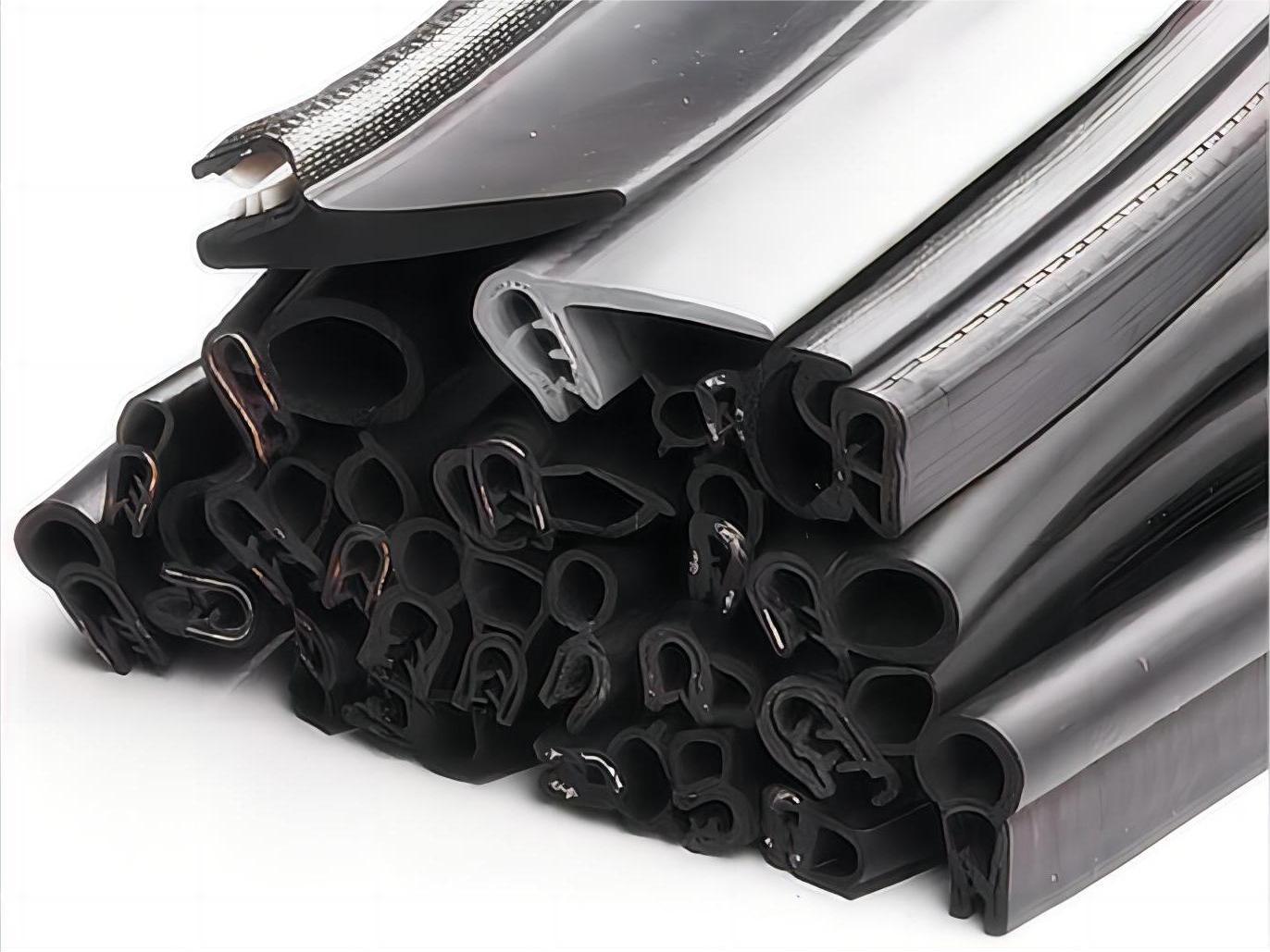
1. Suitable structure for casement windows

D-type or P-type hollow structures should be selected, which can form an air buffer layer during compression and increase sound insulation by 30% compared to solid rubber strips 
2. Suitable structure for sliding windows

It needs to be equipped with a U-shaped winged structure, and the side wings can effectively fill the sliding gap. The water tightness can reach 0.3MPa (equivalent to a pressure of 3 meters deep) 
3. Basis for specification selection

According to the size of the window frame slot, the cross-sectional size of the rubber strip should be 15% -20% larger than the slot to ensure compression

What are the special requirements for sealing strips in different parts of cars?

1. Door frame sealing strip

Plush treatment is required to reduce friction noise and improve the smoothness of door opening and closing 
2. Engine compartment sealing strip

Materials with good oil resistance must be selected through oil resistance testing (volume change rate ≤ 15% after soaking in IRM903 oil for 70 hours) 
3. Sunroof sealing strip

Emphasize weather resistance (QUV aging test for 3000 hours without cracks) 
4. Sealing strip for battery pack

Adopting an irregular composite structure, the inner layer is made of EPDM to ensure elasticity, and the outer layer is made of TPV to enhance wear resistance, with good waterproofing

What are the special requirements for household appliance sealing strips?

1. Refrigerator door seal

Magnetic composite layer is required to ensure stable adsorption force below 0 ℃ 
2. Sealing strip for air conditioning cabinet unit

Require low VOC emissions (≤ 10 μ g/m ³) 
3. Sealing strip for water dispenser/water purifier

Seals that come into contact with drinking water must comply with the "Specification for Sanitary and Safety Evaluation of Drinking Water" 
4. Microwave oven sealing strip

Must meet both high temperature resistance (above 120 ℃) and aging resistance requirements simultaneously

What aspects should be considered when choosing rubber mats for cowsheds and livestock mats?

For dairy farms, beef cattle breeders, and ranch managers, choosing suitable cowshed rubber pads is crucial for ensuring cattle welfare, reducing disease risks, and optimizing ranch operations. The following provides clear and structured answers to specific scenario questions for different groups to help you make informed decisions.

Which material of rubber pad is suitable for long-term use in a cowshed?

The material directly determines the service life and performance of the rubber pad. The core points are as follows:

1. Choose natural rubber or synthetic rubber pads with high rubber content. This type of material has good elasticity, aging resistance, and strong wear resistance. It can withstand the trampling and friction of cattle for a long time and is not easy to crack, break, or deform.
2. Avoid using mats with excessive recycled rubber content. This type of mat has high hardness, high brittleness, poor toughness, is prone to chip shedding, and has a short lifespan. The fallen debris may even be ingested by cows, causing digestive problems.
3. Refer to the International Organization for Standardization standard for rubber products for livestock, which specifies the minimum rubber content for durable livestock mats (not less than 60%).

橡胶硫化工艺详解:从生胶到坚韧橡胶的蜕变之旅

Detailed explanation of rubber vulcanization process: the journey of transformation from raw rubber to tough rubber

橡胶硫化工艺详解:从生胶到坚韧橡胶的蜕变之旅

What is rubber vulcanization? In fact, it can be seen everywhere in life

When you drive a car speeding on the highway, when you run in comfortable sports shoes, when you seal pipes with sealing rings, you may not realize that these rubber products can withstand pressure, wear and temperature, all thanks to a key process——Vulcanization.How does the vulcanization process achieve this miraculous transformation from sticky rubber to tough rubber products? This article will take you on a deep exploration of the scientific principles, technological evolution, and future trends of rubber vulcanization.

The scientific principle of vulcanization process: the magic of molecular weaving

1.1 From Linear to Mesh: The Essence of Vulcanization

Sulfurization is achieved throughchemical cross-linking reactionThe process of transforming rubber molecules from a linear structure to a three-dimensional network structure. Untreated rubber has plasticity but low strength and is prone to wear, while vulcanized rubber obtains excellent properties such as high strength, high elasticity, and aging resistance.

Molecular structural changes:

Raw rubber:Long chain like molecules that can slide freely exhibit viscoelasticity

Vulcanized rubber:The formation of sulfur bridges or carbon carbon cross-linking bonds between molecular chains forms a stable network structure

1.2 The three elements of vulcanization: temperature, time, and pressure

The vulcanization reaction requires precise control of three key parameters

Temperature:Usually at 140-180 ℃, adjusted according to the type of rubber and vulcanizing agent

Time:From a few minutes to several hours, determine the optimal vulcanization time (t'c90) using a vulcanizing instrument (such as a rotorless vulcanizing instrument)

Stress:0.5-2.0MPa, Ensure that the rubber material is in close contact to prevent the formation of bubbles

Professional Tips:According to the ISO 6502-3:2025 standard, the vulcanization characteristics are evaluated through minimum torque (ML), scorch time (ts2), and positive vulcanization time (t'c90) to ensure product quality stability.

门窗密封胶条选用指南

Guidelines for selecting door and window sealant strips

门窗密封胶条选用指南


Do your doors and windows always leak water on rainy days? Can you still hear outdoor noise after closing the window? These issues may all point to an overlooked detail - the sealing strip. As the "invisible guardian" of doors and windows, this seemingly simple accessory plays a key role in sealing, waterproofing, sound insulation, and thermal insulation. Its performance directly affects the comfort of living and the service life of doors and windows. According to the market research on building decoration in 2025, the repair rate of doors and windows caused by improper selection of sealing strips is as high as 32%, far exceeding the quality problems of profiles.

Classification and Material of Sealing Strips: Choosing the Right Foundation is Key

The performance of the sealing strip depends first and foremost on the material. At present, the market is mainly divided into two categories: single material and composite material. The former uses rubber or plastic as the substrate, while the latter enhances specific properties through the combination of multiple materials.

In a single material,EPDM sealing stripHe is an all-around player in the field of doors and windows. Its tensile strength can reach 10-15 MPa, and its elongation at break exceeds 300%. It can still maintain elasticity in the temperature range of -60 ℃ to 150 ℃, with outstanding weather resistance and aging resistance, especially suitable for cold northern regions or high temperature and high humidity southern regions. By contrast,Polyvinyl chloride (PVC) rubber stripThe cost is only 50% of EPDM, but the temperature resistance range is only -25 ℃ to 70 ℃. Long term use is prone to hardening and cracking, making it more suitable for short-term decoration or budget limited scenarios.Silicone rubber (MVQ) Better temperature resistance (-60 ℃ to 300 ℃), but higher price, mostly used in special environments such as sunrooms or laboratories.

Installation and selection: Details determine the sealing effect

After selecting the right material, the installation method and cross-sectional shape design also affect the sealing effect. There are currently three mainstream installation methods:Press in typePenetrating and adhesive.Among them, the press in type has become the preferred choice for door and window manufacturers due to its firm installation and resistance to detachment, especially suitable for sealing between frames and sashes. During installation, it is necessary to ensure that the rubber strip fits tightly with the groove of the profile. If the gap is too large, it may cause sealing failure, while if it is too small, it may affect the flexibility of opening and closing doors and windows.

The selection of cross-sectional shape should be based on the sealing requirements.Semi closed section.The rubber strip is suitable for scenarios with high sealing performance requirements due to its large compression range (usually 3-5mm);Closed sectionIt is more stable and suitable for high-rise residential buildings with high wind pressure.

Purchase suggestion: Avoid these pitfalls, practical and cost-effective

Faced with a dazzling array of products on the market, ordinary consumers can judge the quality of sealing strips from the following three aspects:

At first glance at the material identification:High quality rubber strips will be clearly labeled with parameters such as material (such as EPDM) and temperature resistance range. Products without labeling or with vague labeling should be handled with caution. Elasticity can be determined through tensile testing - qualified EPDM rubber strips should be able to quickly return to their original state without significant deformation when stretched to three times their original length and released.

Two option installation method:Priority should be given to press in installation for household doors and windows, which is more durable than adhesive installation (adhesive strips are prone to peeling off due to aging of the adhesive layer). During installation, check if the rubber strip is flat and if the interface is seamlessly connected to avoid any "wavy" folds that may affect the seal.

Three to one cost-effectiveness ratio:Although EPDM rubber strips have a higher unit price than PVC, their service life can reach 15-20 years (PVC only has 5-8 years), making them more cost-effective in the long run. In northern regions, it is recommended to choose rubber strips with a Shore hardness of 60-70 (moderate feel), while in humid southern regions, water swelling rubber strips can be used to enhance waterproofing.

Finally, a reminder: when installing glass,Prioritize using sealing strips instead of on-site gluing.The rubber strip is produced industrially, with controllable quality and easy replacement; On site gluing not only makes it difficult to ensure uniform thickness of the adhesive layer, but also poses safety hazards during high-altitude operations. Remember, choose the right sealing strip to make doors and windows truly the "first line of defense" of your home.

With the improvement of consumers' requirements for living quality, sealant strips are becoming the key to the performance competition of doors and windows from "supporting role". In the future, bio based adhesive strips that combine weather resistance and environmental friendliness may become a new trend, but for now, choosing the right materials and paying attention to installation details are still the most effective ways for ordinary households to improve the performance of doors and windows.

Analysis of the entire process of customized non-standard silicone sealing strips - every step from demand to finished product is precise and controllable

The core competitiveness of non-standard silicone sealing strips lies in "on-demand customization", and the professionalism and standardization of the customization process directly determine the adaptability, performance stability, and service life of the product. Many customers, when customizing non-standard silicone sealing strips, often lack understanding of the customization process and key nodes, resulting in low communication efficiency, products that do not meet expectations, and even increased costs and project timelines. This article will provide a detailed analysis of the entire process of customizing non-standard silicone sealing strips, from requirement submission to finished product delivery, clarifying the core points of each step to help customers efficiently complete customization and avoid various risks.

Step 1: Communicate requirements and analyze operating conditions to clarify the core parameters for customization. This is the foundation of customization and the most crucial step. The customer needs to clearly explain three core information to the manufacturer: first, the installation scenario and operating conditions, including the temperature range of the operating environment (such as extreme operating conditions from -60 ℃ to 250 ℃), pressure range, contact medium (such as oil, acid, alkali, water vapor, etc.), whether special properties such as UV resistance and flame retardancy are required, as well as the vibration frequency and service life requirements of the equipment. These information directly determine material selection and formula design; The second is the size and structural requirements, which require accurate cross-sectional dimensions, length, and installation methods. If there are irregular structures, drawings, samples, or 3D models can be provided to clarify tolerance requirements (usually non-standard product tolerances can be controlled within ± 0.05mm to ± 0.15mm), to avoid installation difficulties or sealing failures caused by size deviations; The third is the quality standards and certification requirements, such as food grade products that need to comply with FDA and LFGB standards, automotive fields that need to pass IATF 16949 certification, and medical fields that need to comply with ISO 13485 certification to ensure that products meet industry standards and usage requirements. Professional manufacturers will arrange technical teams to coordinate, conduct in-depth analysis of working conditions, and provide optimization suggestions based on their own experience to avoid customers' product discrepancies caused by parameter omissions.

Step 2: Material selection and formula optimization, matching working conditions and requirements. Based on the first step of operating condition analysis, the manufacturer will screen suitable silicone substrates and optimize the formula. Commonly used silicone substrates include ordinary silicone, gas-phase silicone, fluorosilicone, etc. The performance of different substrates varies significantly - ordinary silicone is suitable for room temperature and dry conditions, with a temperature resistance range of -40 ℃ to 200 ℃; Gas phase silica gel has high purity and good elasticity, suitable for precision instruments, food and medical fields; Fluorosilicone is oil resistant and corrosion-resistant, suitable for complex working conditions such as industrial equipment and automotive engines. If there are special performance requirements, corresponding additives will be added to the substrate, such as adding UV resistant additives to improve outdoor service life, adding flame retardants to achieve UL94 V-0 flame retardant level, adding conductive particles to achieve conductive function, and adjusting the chemical structure of polymer side groups or cross-linking points to ensure that the key performance degradation of the material does not exceed the allowable range within the preset life cycle. After the material selection is completed, small-scale formula testing will be conducted to verify key indicators such as hardness, tensile strength, and compression set rate of the material, ensuring compliance with requirements.

Step 3: Mold design and processing to ensure precise dimensions. Mold is the core carrier for customized non-standard silicone sealing strips, and its accuracy directly determines the accuracy of product size and structure. Manufacturers will use CAD modeling technology to design molds based on the dimensions and structural drawings provided by customers, clarify key structures such as mold cavities, flow channels, and exhaust holes, and optimize mold design in combination with molding processes (such as extrusion molding, injection molding, and compression molding) to avoid problems such as incomplete filling, dimensional deviations, and surface defects. The mold processing adopts precision CNC equipment with an accuracy of ± 0.01mm. After the processing is completed, a trial mold will be conducted to verify the adaptability of the mold through trial production. If there are problems such as dimensional deviation or unreasonable structure, the mold will be adjusted in a timely manner until it meets the requirements. For small batch customization, some manufacturers can provide 3D printing rapid prototyping services, which can shorten the mold development cycle by more than 40% and reduce customer trial and error costs.

Step 4: Production manufacturing and process control to ensure batch stability. After confirming the mold, enter the mass production stage. During the production process, manufacturers will strictly control key process parameters such as mixing temperature, vulcanization time, injection speed, mold temperature, etc. - the mixing process needs to ensure that the materials are evenly mixed to avoid bubbles and impurities; The vulcanization process requires temperature and time control to ensure complete cross-linking of silicone gel and guarantee the mechanical and sealing properties of the product; The extrusion or injection process requires control of speed and pressure to ensure uniform product size and smooth surface. At the same time, establish a statistical process control system to monitor key process parameters in real-time, identify and eliminate systematic variations, and ensure consistency of each batch of products. For products with special structures, segmented production, splicing processing, and other methods will be used to ensure that the product structure is complete and the sealing performance meets the standards.

Step 5: Quality inspection and delivery of finished products to avoid usage risks. After the completion of finished product production, comprehensive quality inspection will be carried out, including dimensional accuracy, hardness (usually 40-80 Shore A), tensile strength (≥ 5MPa), elongation at break (≥ 200%), compression permanent deformation rate (≤ 15% is preferred), sealing performance, temperature resistance, environmental performance, etc. For special functional requirements, special tests will also be conducted, such as fluid resistance testing, flame retardant testing, medium resistance testing, etc., to ensure that the product meets customized requirements and relevant standards. After passing the inspection, packaging and labeling are carried out to clarify product specifications, batches, usage instructions, and other information, and delivery is completed according to customer requirements. At the same time, professional manufacturers will provide after-sales support, such as product installation guidance, usage and maintenance suggestions. If there are any product quality problems, timely solutions will be provided to protect customer rights.


Non standard silicone sealing strip - customized solution to solve sealing problems in special scenarios

In the fields of industrial manufacturing, construction engineering, precision instruments, etc., sealing performance is the core element to ensure stable operation and prolong the service life of equipment. However, standard silicone sealing strips are limited by fixed specifications and uniform performance, often unable to adapt to special requirements such as irregular structures and extreme working conditions. In this case, non-standard silicone sealing strips have become a key choice for solving various sealing pain points with the advantage of customization. Non standard silicone sealing strips, as the name suggests, are silicone sealing products that are designed and produced according to customers' specific usage scenarios, performance requirements, and size parameters, without adhering to industry standards. Their core value lies in "precise adaptation and on-demand customization", filling the market gap that standard products cannot cover.

Compared with standard silicone sealing strips, the core advantages of non-standard silicone sealing strips are reflected in two dimensions: "customization" and "adaptability". From the perspective of materials, non-standard products can choose different types of silicone substrates according to working conditions, such as high and low temperature resistant silicone, oil resistant fluorosilicone, food grade silicone, flame retardant silicone, etc. Even by adding special additives, the material's fatigue resistance, UV resistance, conductivity or insulation performance can be optimized to meet the strict requirements of different scenarios - for example, outdoor equipment sealing needs to focus on weather resistance, medical equipment sealing needs to comply with FDA, ISO 13485 and other certification standards, and industrial equipment sealing needs to strengthen oil and corrosion resistance. From the perspective of size and structure, non-standard products can accurately match irregular cross-sections, special lengths, and complex installation spaces. Whether it is sealing with curved or irregular grooves, or sealing with narrow gaps and high-frequency vibration parts, perfect fit can be achieved through customized molds, avoiding the problems of "size mismatch and poor sealing" of standard products, and solving pain points such as air leakage, water leakage, dust prevention, and poor sound insulation from the root.

The application scenarios of non-standard silicone sealing strips almost cover all fields that require personalized sealing. In the automotive industry, customized high-temperature resistant and waterproof sealing strips for new energy vehicle battery packs and engine compartments can be used to achieve IP67+or higher sealing standards, ensuring battery safety and stable engine operation; In the field of architecture, aging resistant and insulated sealing strips can be customized according to the irregular structure of doors and windows, as well as the size of curtain wall gaps, to improve the energy-saving effect and sealing performance of buildings; In the field of precision electronics, customized flame-retardant and insulating micro sealing strips can be used to adapt to the narrow space inside instruments, preventing dust and moisture from entering and damaging components; In the medical and food fields, food grade and medical grade silicone sealing strips can be customized to meet the requirements of non toxicity and high cleanliness, and to adapt to the sealing needs of medical devices and food processing equipment. In addition, in high-end fields such as aerospace, rail transportation, and industrial equipment, non-standard silicone sealing strips have become a core component for ensuring equipment reliability through precise performance customization.

With the upgrading of downstream industries, the demand for non-standard silicone sealing strips is continuously increasing. Its customized production is not simply "processing according to size", but a systematic engineering that runs through material selection, mold design, process control, and quality inspection - from customer demand communication and working condition analysis, to material formula optimization, mold precision processing, to finished product testing and trial assembly debugging, each link directly affects the final sealing effect and product life. Choosing a professional non-standard silicone sealing strip manufacturer not only provides precise customized solutions, but also relies on its technical strength to solve sealing problems under special working conditions, achieving a "one-time customization, long-term reliability" effect, and providing solid guarantees for the stable operation of various equipment and projects.

为什么要重视三元乙丙密封条的选择?

Why should we pay attention to the selection of EPDM sealing strips?

为什么要重视三元乙丙密封条的选择?

1. Material differences lead to significant performance differencesTaking the case of Ms. Wang, a homeowner in Beijing, as an example, PVC sealing strips have a lifespan that is more than 50% shorter than EPDM, resulting in paying nearly a thousand yuan more in heating fees each year 


2. Market chaos is widespread:According to a survey conducted by the Guangdong Doors and Windows Association, 72% of household sealing strips have material misjudgments in their selection 


3. The invisible function has a significant impactAs the "invisible guardian" of doors, windows, cars, and home appliances, sealing strips are directly related to core performance such as sound insulation, thermal insulation, and waterproofing 


4. Significant long-term economic differencesHigh quality EPDM sealing strips have a lifespan of 15-20 years, while inferior products only last 2-3 years, resulting in a long-term cost difference of over 10 times

2025橡胶密封条厂家哪家好?翔和橡塑定制橡胶密封件厂家直供有保障

Which is a good rubber sealing strip manufacturer in 2025?

2025橡胶密封条厂家哪家好?翔和橡塑定制橡胶密封件厂家直供有保障

In the field of industrial production and manufacturing, rubber sealing strips are a fundamental but critical component, and their performance and quality directly affect the sealing effect and service life of the final product. Therefore, choosing the appropriate manufacturer has become a key concern for many enterprises.
1、 The basic situation and production scale of the enterprise. The enterprise currently has more than 60 employees, forming a team structure that includes technology research and development, quality control, production management, and engineering support. Among them, there are 5 technical personnel and 5 quality management personnel, 6 production management personnel, and 7 engineering support personnel. These personnel provide basic support for product research and development, stability of the production process, and subsequent services.
From the perspective of production mode, enterprises integrate research and development, design, production, and service, and can provide customized production solutions according to demand. Its products mainly enter the market through direct supply from manufacturers, reducing intermediate links and aiming to ensure timely and controllable supply.
2、 Main performance characteristics of rubber sealing strips
The performance of rubber sealing strips mainly depends on material properties and production processes. The following are several common characteristics of rubber materials in sealing applications:
1. Elastic recovery ability
Rubber materials usually have good elasticity and can quickly recover their original shape after being stretched or compressed. This feature enables the sealing strip to adapt to small deformations of the contact surface and maintain a long-lasting sealing effect.
2. Wear resistance performance
Rubber products can withstand friction and wear during daily use to a certain extent. For example, in industrial equipment or transportation vehicles, sealing strips are often in dynamic contact, and the wear resistance of rubber helps to extend their service life.
3. Damping and shock absorption effects
Rubber materials can absorb some energy when subjected to impact or vibration, providing a cushioning effect. This feature makes it suitable for occasions that require shock absorption or noise reduction, such as the base or connection parts of mechanical equipment.
4. Sealing performance
Rubber sealing strips can effectively block the leakage of liquids or gases by tightly adhering to the contact surface. This characteristic makes it widely used in sealing applications for pipeline systems, door and window seals, and various mechanical components.
3. Comprehensive capability assessment of production enterprises
When choosing a rubber sealing strip production enterprise, in addition to focusing on product performance, it is also necessary to comprehensively evaluate the enterprise's production qualifications, technical capabilities, and quality control system.
Based on the existing production site and personnel configuration, a relatively complete production process has been formed. The technical team is able to design and adjust products according to customer needs, while the quality management team supervises the production process to ensure that the products meet relevant standards.
In addition, the engineering support team of the enterprise is responsible for the maintenance of production equipment and process support, which helps to ensure the continuity of the production process. Through direct supply from manufacturers, enterprises can communicate their needs directly with customers and make flexible adjustments during the production process.
4、 Summary
The selection of rubber sealing strips needs to comprehensively consider multiple factors such as material characteristics, production enterprise scale, and technical capabilities. As a rubber product manufacturing enterprise established for more than ten years, we have established a production system from research and development to service. Our products have common characteristics of rubber materials in terms of elasticity, wear resistance, and sealing.
For enterprises with procurement needs, it is recommended to conduct in-depth understanding of the production enterprise's technical capabilities, quality control, and service models based on their actual application scenarios, in order to make more suitable choices.

取暖每月多花500?这个小配件帮你冬天"省"出一件羽绒服!

Spending 500 extra per month on heating? This small accessory helps you save a down jacket in winter!

取暖每月多花500?这个小配件帮你冬天"省"出一件羽绒服!

One autumn rain and one cold, ten autumn rains wearing cotton.

In October this year, the rainfall was very dense, and the concept of autumn felt vague. Unconsciously, half a foot had already stepped into winter - what is the most frustrating thing about winter, of course, is that there is always a "mysterious cold wind" on the sofa even though the heating is on at home. The newly paid heating fee seemed to slip through the window gap, and the air leakage from the office door made typing hands stiff from the cold. Don't let a 1mm gap ruin your winter warmth! Today, I will teach you how to use an inconspicuous sealing strip to block the "black hole" of air leakage, saving hundreds of dollars in heating costs every month and making your home more comfortableTemperature rises by 7 ℃

Window gap air leakage=throwing away 500 yuan in vain every month? Your 'invisible wallet' is leaking air

"When I was brushing my mobile phone in the sofa, I was suddenly shivered by the cold wind blowing through the window - this is no air leak, it's simply a 'cold air conveyor belt'!" The roast of Beijing netizen Sister Li stabbed countless people. The problem of air leakage through door and window gaps in winter is much more expensive than you might imagine: building energy efficiency data shows that heat loss caused by door and window gaps accounts for 25% -30% of total household energy consumption, equivalent to paying an additional 200-500 yuan in heating fees per month.

Even worse is the "temperature shock" caused by air leakage: even though the living room heating is set to 26 ℃, the temperature by the window is only 18 ℃, making it easy for children to catch a cold while playing on the sofa; The gap under the glass door of the office looks like an "ice cellar air inlet", and colleagues are wrapped in blankets to work. Even when the air conditioning is turned on to 30 ℃, it still feels cold. The culprit behind these problems is often the overlooked door and window sealing strip - after aging and cracking, it's like opening an "invisible skylight" for the home.

Three types of sealing strips tested: selecting the right material is necessary to "lock in temperature and save money"

There are various types of sealing strips on the market, PVC、EPDM、 Which type of silicone is more reliable? We tested three types of mainstream materials and found significant differences in the results:

1: PVC tape: The most common economical choice, but it is prone to hardening and cracking at low temperatures. Mr. Wang, who lives in Harbin, once stepped on a trap: "Last winter, the rubber strip froze like a plastic stick, breaking easily with just one break, and the air leakage from the window crevices became even more severe. ”This type of rubber strip is suitable for warm southern regions and has a lifespan of only 3-5 years.

2: Silicone sealing strip: with top-notch high and low temperature resistance (-60 ℃ to 200 ℃), excellent elasticity, but relatively high price. Suitable for damp environments such as kitchens and bathrooms, it costs several hundred or even thousands of yuan to replace the entire house for an ordinary family, with slightly lower cost-effectiveness.

3: EPDM EPDM rubber strip:The first choice for cost-effectiveness and the king of comprehensive performance!The weather resistance reaches 10-15 years, and it still maintains elasticity at -50 ℃ to 150 ℃, with a compression permanent deformation rate of less than 20% (industry average of 25%).