

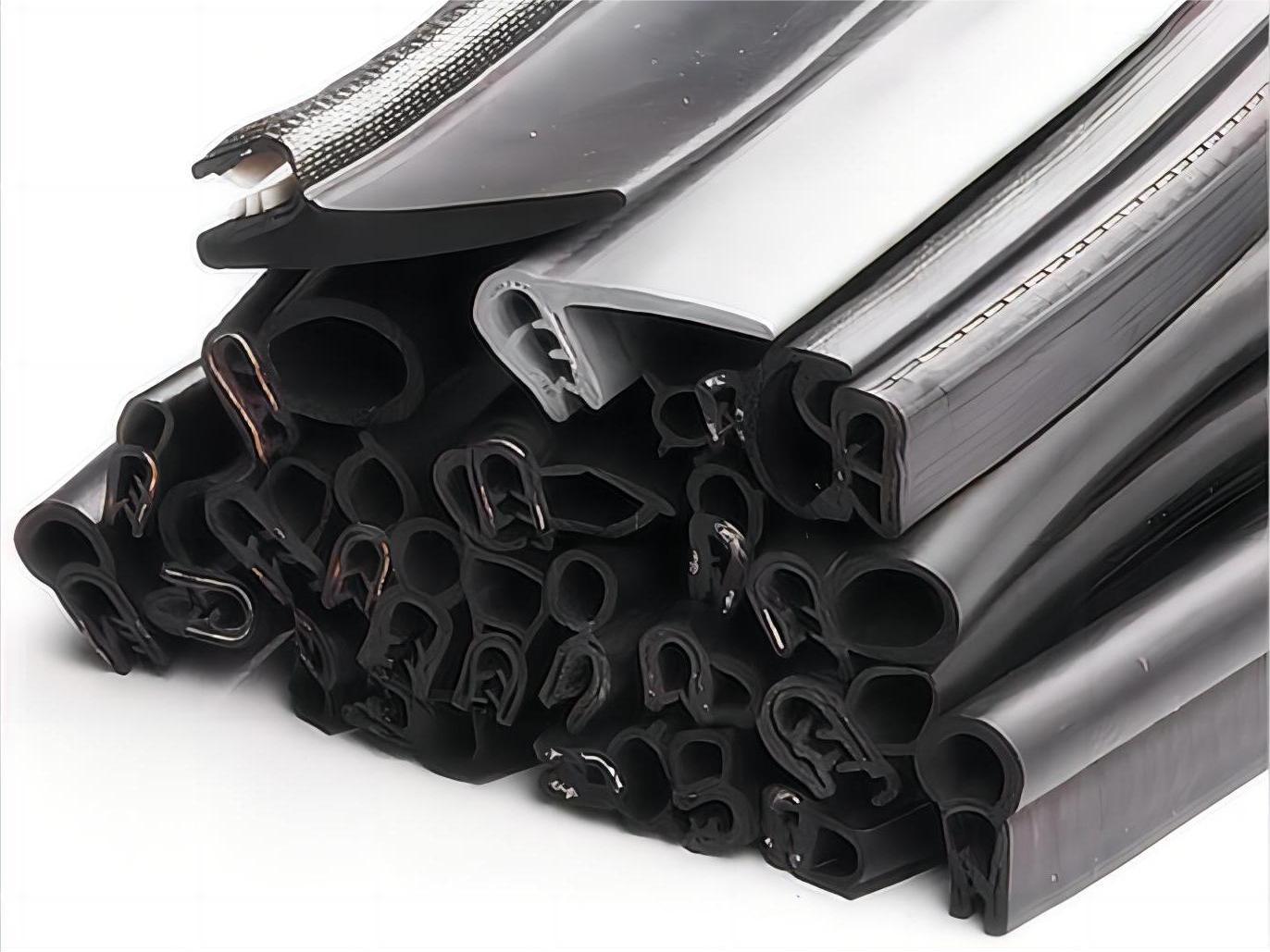
Do your doors and windows always leak water on rainy days? Can you still hear outdoor noise after closing the window? These issues may all point to an overlooked detail - the sealing strip. As the "invisible guardian" of doors and windows, this seemingly simple accessory plays a key role in sealing, waterproofing, sound insulation, and thermal insulation. Its performance directly affects the comfort of living and the service life of doors and windows. According to the market research on building decoration in 2025, the repair rate of doors and windows caused by improper selection of sealing strips is as high as 32%, far exceeding the quality problems of profiles.
Classification and Material of Sealing Strips: Choosing the Right Foundation is Key
The performance of the sealing strip depends first and foremost on the material. At present, the market is mainly divided into two categories: single material and composite material. The former uses rubber or plastic as the substrate, while the latter enhances specific properties through the combination of multiple materials.
In a single material,EPDM sealing stripHe is an all-around player in the field of doors and windows. Its tensile strength can reach 10-15 MPa, and its elongation at break exceeds 300%. It can still maintain elasticity in the temperature range of -60 ℃ to 150 ℃, with outstanding weather resistance and aging resistance, especially suitable for cold northern regions or high temperature and high humidity southern regions. By contrast,Polyvinyl chloride (PVC) rubber stripThe cost is only 50% of EPDM, but the temperature resistance range is only -25 ℃ to 70 ℃. Long term use is prone to hardening and cracking, making it more suitable for short-term decoration or budget limited scenarios.Silicone rubber (MVQ) Better temperature resistance (-60 ℃ to 300 ℃), but higher price, mostly used in special environments such as sunrooms or laboratories.
Installation and selection: Details determine the sealing effect
After selecting the right material, the installation method and cross-sectional shape design also affect the sealing effect. There are currently three mainstream installation methods:Press in type、Penetrating and adhesive.Among them, the press in type has become the preferred choice for door and window manufacturers due to its firm installation and resistance to detachment, especially suitable for sealing between frames and sashes. During installation, it is necessary to ensure that the rubber strip fits tightly with the groove of the profile. If the gap is too large, it may cause sealing failure, while if it is too small, it may affect the flexibility of opening and closing doors and windows.
The selection of cross-sectional shape should be based on the sealing requirements.Semi closed section.The rubber strip is suitable for scenarios with high sealing performance requirements due to its large compression range (usually 3-5mm);Closed sectionIt is more stable and suitable for high-rise residential buildings with high wind pressure.

Purchase suggestion: Avoid these pitfalls, practical and cost-effective
Faced with a dazzling array of products on the market, ordinary consumers can judge the quality of sealing strips from the following three aspects:
At first glance at the material identification:High quality rubber strips will be clearly labeled with parameters such as material (such as EPDM) and temperature resistance range. Products without labeling or with vague labeling should be handled with caution. Elasticity can be determined through tensile testing - qualified EPDM rubber strips should be able to quickly return to their original state without significant deformation when stretched to three times their original length and released.
Two option installation method:Priority should be given to press in installation for household doors and windows, which is more durable than adhesive installation (adhesive strips are prone to peeling off due to aging of the adhesive layer). During installation, check if the rubber strip is flat and if the interface is seamlessly connected to avoid any "wavy" folds that may affect the seal.
Three to one cost-effectiveness ratio:Although EPDM rubber strips have a higher unit price than PVC, their service life can reach 15-20 years (PVC only has 5-8 years), making them more cost-effective in the long run. In northern regions, it is recommended to choose rubber strips with a Shore hardness of 60-70 (moderate feel), while in humid southern regions, water swelling rubber strips can be used to enhance waterproofing.
Finally, a reminder: when installing glass,Prioritize using sealing strips instead of on-site gluing.The rubber strip is produced industrially, with controllable quality and easy replacement; On site gluing not only makes it difficult to ensure uniform thickness of the adhesive layer, but also poses safety hazards during high-altitude operations. Remember, choose the right sealing strip to make doors and windows truly the "first line of defense" of your home.
With the improvement of consumers' requirements for living quality, sealant strips are becoming the key to the performance competition of doors and windows from "supporting role". In the future, bio based adhesive strips that combine weather resistance and environmental friendliness may become a new trend, but for now, choosing the right materials and paying attention to installation details are still the most effective ways for ordinary households to improve the performance of doors and windows.